|


| Quantity: | |
|---|---|
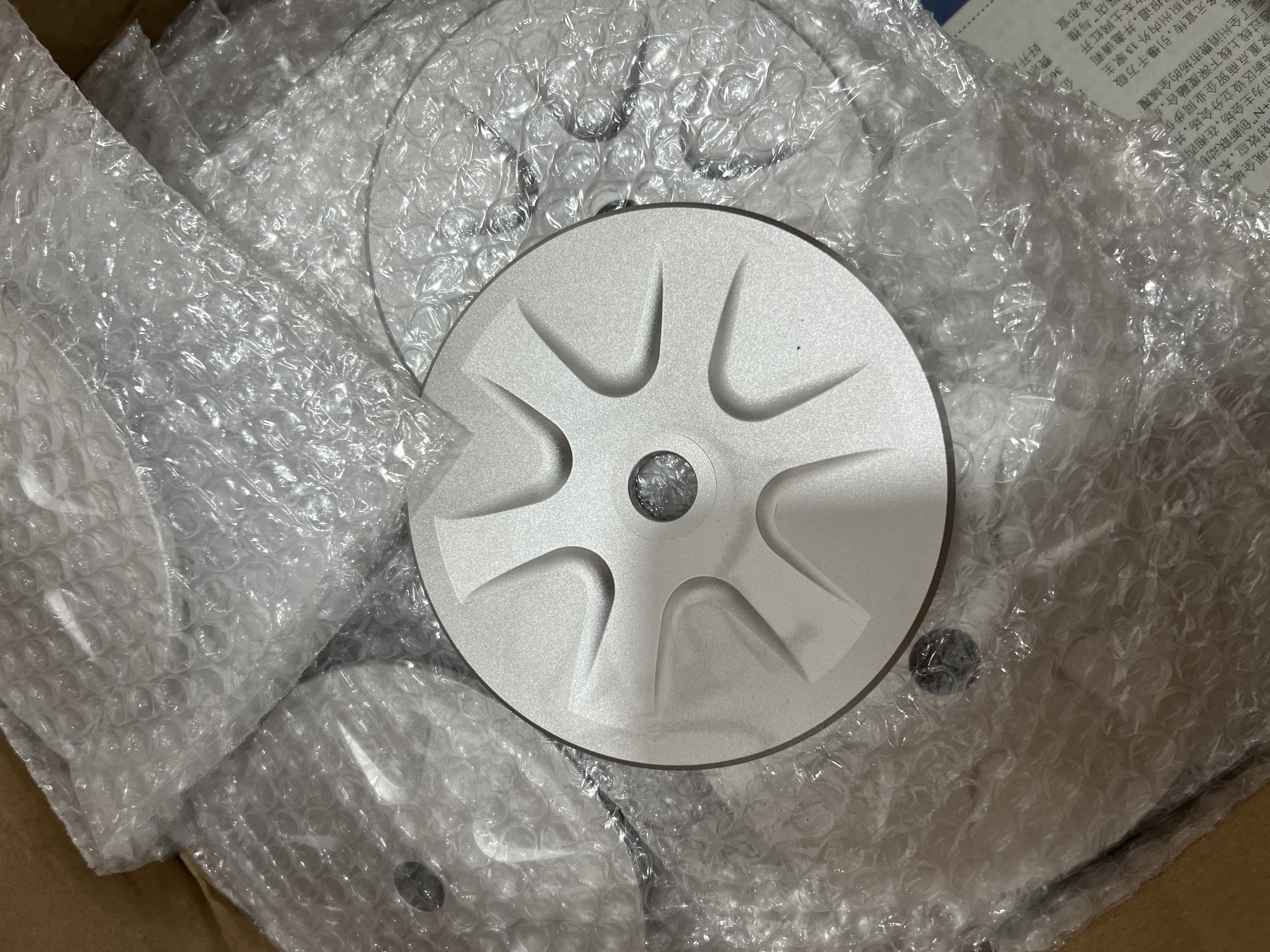
Product Name:
Forged Aluminum Seal Plate
Product Description:
This product is manufactured from aerospace-grade 7075-T6 high-performance aluminum alloy using a precision forging process. Designed as a heavy-duty, high-rigidity structural component, it offers excellent fatigue resistance and superior dimensional stability.
The surface undergoes fine sandblasting, resulting in a uniform matte metallic finish. This not only enhances the aesthetic quality but also improves surface wear and corrosion resistance. It is ideally suited for industrial transmission systems, aerospace applications, and high-end mechanical equipment where extreme strength and reliability are paramount.
Material Composition and Mechanical Properties Parameters:
Chemical Composition | |||||||||
Elements | Zn | Mg | Cu | Cr | Si | Fe | Mn | Ti | Al |
Percentage(%) | 5.1-6.1 | 2.1-2.9 | 1.2-2.0 | 0.18-0.28 | ≤0.40 | ≤0.50 | ≤0.30 | ≤0.20 | Bal. |
Mechanical Properties (T6):
Tensile Strength (T.S): 560~572 MPa
Yield Strength(Y.S): 490~503 MPa
Elongation(50mm): 7%~11%
Brinell Hardness(HB): 150~160
Fatigue Strength(10⁷cycles): ≈ 158~160 MPa
Process Route:
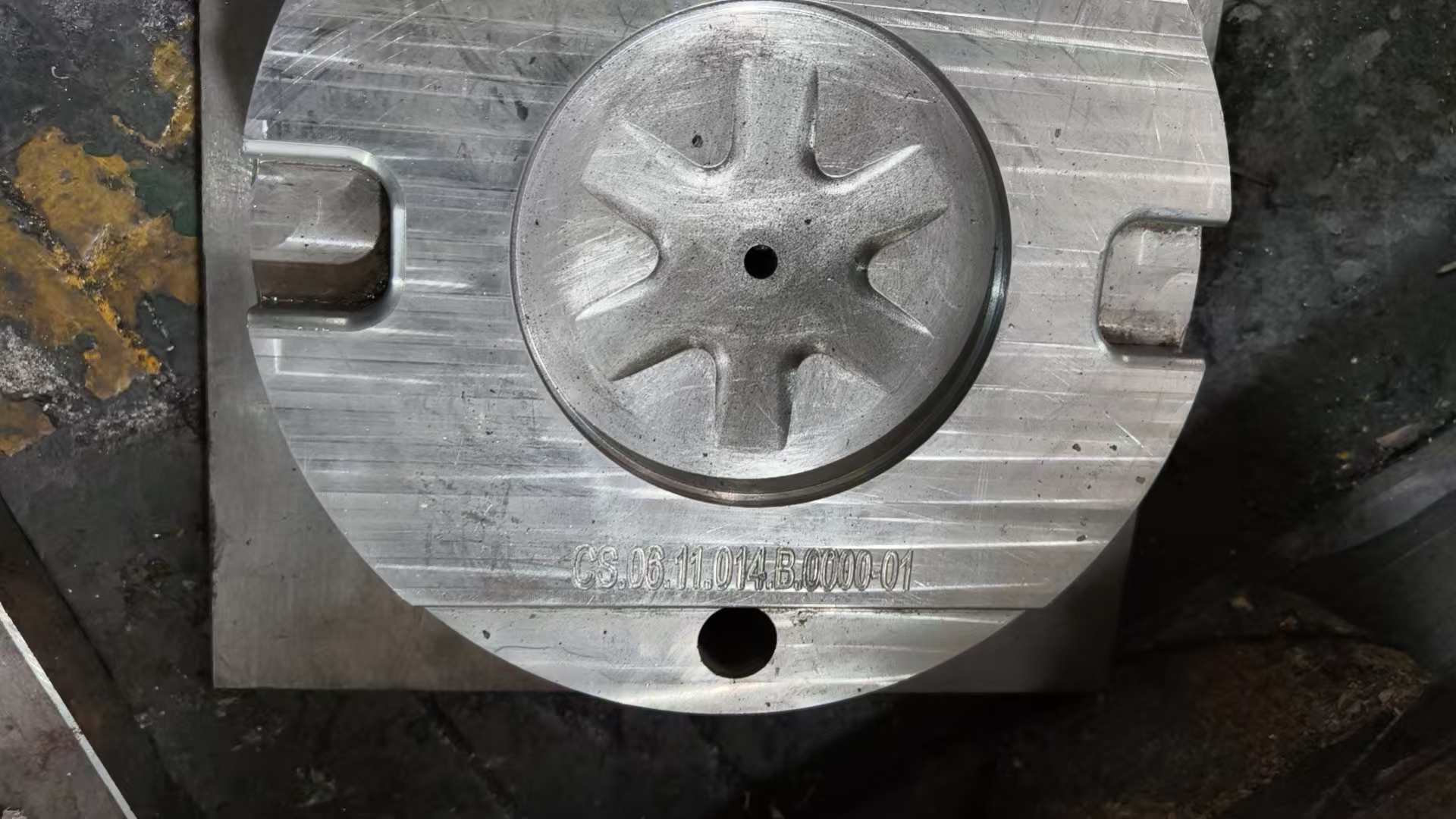
Raw Material Cutting → Heating → Hot Die Forging (Closed-Die Forging)→ Trimming → T6 Heat Treatment (Solution + Aging) → Stress Relieving → Precision CNC Machining (Turning/Milling/Drilling) → Final Inspection → Packaging & Shipment

Key Process Difficulties & Control Measures
Difficulty | Description | Control Measures |
Incomplete Filling/Folding | The flange edge of the seal plate is thin, and the transition to the web is steep, which can easily cause laps or folds. | Optimize the parting line location; strictly control the ram speed and underfill allowance. |
Heat Treatment Distortion | 7075 is highly sensitive to quenching cooling, causing large flat surfaces to warp easily. | Adopt vertical quenchingwith dedicated straightening fixtures; perform subsequent stress relief annealing. |
Machining Chatter Marks | The T6 temper has high hardness, making it prone to work hardening and chatter during cutting. | Use sharp carbide tools with sufficient coolant; apply high-speed milling with low feed rates. |
Grain Size Control | Excessive forging temperature leads to coarse grains, reducing toughness. | Strictly control the initial and final forging temperatures;avoid overheating (Temperature > 500°C). |
After completion, we will conduct a full-scale scanning inspection to ensure that all dimensions and qualities are qualified, and provide PPAP-related materials as per the customer's requirements.
Packaging
After all the tests are qualified, we will package and ship them uniformly. We will keep following up on orders and visiting customers, provide the most professional after-sales service, and always pay attention to customers' suggestions and new demands.