
Views: 0 Author: Site Editor Publish Time: 2026-08-07 Origin: Site


Balancing part weight, structural integrity, and scalable production costs remains a persistent engineering challenge in modern manufacturing. Selecting the wrong manufacturing process leads to compromised unit economics, excessive tooling amortization periods, or part failure under stress. Engineers frequently debate between machining from solid billet, extrusion, and casting. Each method carries distinct mechanical and financial implications on the shop floor. We provide an objective, evidence-based evaluation of aluminum casting. This process forces or pours molten metal into specific mold cavities to achieve near-net shapes. Understanding its mechanical advantages, inherent limitations, and specific volume thresholds is necessary to justify heavy tooling investments. You will learn how to evaluate alloy properties, mitigate structural risks, and align your production volume with the correct casting methodology for your specific field application.
Volume-Dependent ROI: Aluminum casting offers exceptionally low per-unit costs and fast cycle times, but requires high production volumes to offset significant initial mold and tooling expenses.
Optimal Strength-to-Weight: Delivers a superior strength-to-weight ratio compared to steel, while remaining significantly more cost-effective to cast and machine than titanium.
Design Flexibility: Ideal for consolidating complex assemblies into single, non-standard aluminum casting parts, reducing downstream assembly time and failure points.
Tailored Performance: Mechanical properties can be precisely tailored through alloy selection and heat treatment to meet specific load-bearing or environmental requirements.
Inherent Risks: Requires rigorous quality control to mitigate gas and shrinkage porosity, which can compromise the mechanical properties of critical components.
The metallurgical process relies on heating aluminum alloys above their melting point and introducing the liquid metal into a pre-formed mold. The metal solidifies, taking the exact internal shape of the cavity. This near-net shape capability forms the baseline for high-volume manufacturing. It eliminates the massive material waste associated with heavy CNC machining from solid blocks. When you machine a complex housing from billet, you often turn 80% of the raw material into chips. Casting flips that ratio, utilizing nearly all the melted material for the final part.
Choosing this process over CNC machining requires meeting specific success criteria. We look for three primary indicators before recommending a shift to cast components:
The project demands complex internal geometries, such as cooling jackets or fluid channels, that are physically impossible to reach with standard end mills.
The production run exceeds the break-even volume threshold, typically starting around 2,000 to 5,000 units annually depending on the tooling costs.
The design requires aggressive material waste reduction to meet weight targets without inflating raw material expenditures.
Aluminum is not a single, uniform material. Properties vary drastically based on the specific alloy selected. Selecting the wrong alloy guarantees sub-optimal performance, regardless of the casting method used. We categorize these alloys based on their primary alloying elements, usually silicon, copper, or magnesium.
Alloy Grade | Primary Alloying Elements | Key Characteristics | Common Shop Floor Applications |
|---|---|---|---|
A380 | Silicon, Copper | Excellent fluidity, resists hot cracking, highly stable. | General housings, gearboxes, electronic enclosures. |
A356 | Silicon, Magnesium | High strength, excellent ductility, responds to T6 heat treatment. | Structural brackets, suspension components, aerospace parts. |
A360 | Silicon, Magnesium | Superior corrosion resistance, excellent pressure tightness. | Marine hardware, fluid pump housings, outdoor infrastructure. |
Aluminum possesses a specific gravity of approximately 2.7 g/cm³. Cast iron and steel hover around 7.8 g/cm³. This fundamental physical property allows engineers to design components that weigh nearly two-thirds less than their ferrous counterparts without sacrificing structural rigidity. This material efficiency drives modern engineering decisions across multiple sectors where mass directly impacts performance.
Lightweighting directly impacts downstream logistics and end-use performance. Lighter components reduce shipping freight weights, cutting transportation expenses. In automotive applications, reducing unsprung mass improves fuel efficiency and handling dynamics. For industrial equipment, lighter parts reduce operator fatigue and lower the power requirements for motors and actuators driving the machinery. You can downsize the entire powertrain of a machine when the structural chassis weighs 50% less.
Cast aluminum exhibits excellent metallurgical behavior during secondary CNC machining operations. The material chips easily rather than forming long, stringy swarf. This prevents tool tangling and allows for rapid chip evacuation. Aluminum also dissipates heat rapidly. This thermal conductivity prevents localized heat buildup at the cutting edge, drastically extending the lifespan of carbide cutting tools. Machinists can push spindle speeds and feed rates much higher than they can with steel or titanium.
Achieving a near-net shape reduces the total volume of material requiring removal. Instead of milling away deep pockets from a solid block, CNC machines only need to skim a few millimeters off mating surfaces or tap pre-cast holes. This shortens CNC cycle times from hours to minutes. Reduced cycle times enable massive production scalability, allowing manufacturers to meet aggressive delivery schedules without buying dozens of new milling centers.
Engineers can tailor the physical properties of specific alloys through post-casting thermal processing. The T6 heat treatment cycle is the most common method used in foundries. It involves solution heat treating the metal at high temperatures, quenching it rapidly in water, and then artificially aging it in an oven. This process alters the internal grain structure, significantly increasing yield strength and surface hardness.
This thermal processing allows teams to balance ductility and tensile strength based on the end-use application. A component subjected to heavy impact loads requires higher ductility to absorb energy without fracturing. A static structural bracket requires high yield strength to prevent deformation under constant load. Proper alloy selection combined with precise heat treatment meets both extremes. We often specify A356-T6 when a part needs to survive high-stress fatigue cycles.
Aluminum naturally undergoes a passivation process when exposed to oxygen. It instantly forms a microscopic, dense layer of aluminum oxide on its surface. This oxide layer seals the underlying metal, preventing further oxidation. Unlike steel rust, which flakes away and exposes fresh metal to degradation, the aluminum oxide layer remains stable and self-repairing if scratched during installation or operation.
This inherent sealing performance makes cast aluminum highly suitable for harsh environments. Components exposed to moisture, road salts, or industrial chemicals maintain their structural integrity over long lifespans. Many applications require no secondary protective coatings. Eliminating the need for painting, powder coating, or anodizing streamlines the manufacturing workflow and removes an entire step from the supply chain.
Liquid metal flows into microscopic crevices under pressure. This capability allows manufacturers to cast thin walls, internal cavities, and intricate features that are impossible or cost-prohibitive to machine from solid billet. Draft angles, mounting bosses, and reinforcing ribs integrate directly into the mold design. You can cast a honeycomb internal structure to maximize stiffness while minimizing weight.
This geometric freedom provides a strategic advantage for assembly consolidation. Engineers can design non-standard aluminum casting parts to replace multi-part welded or bolted assemblies. Consolidating five separate machined and welded pieces into a single casting eliminates assembly labor, removes weak weld joints, and reduces the overall bill of materials. Fewer parts mean fewer failure points in the field.
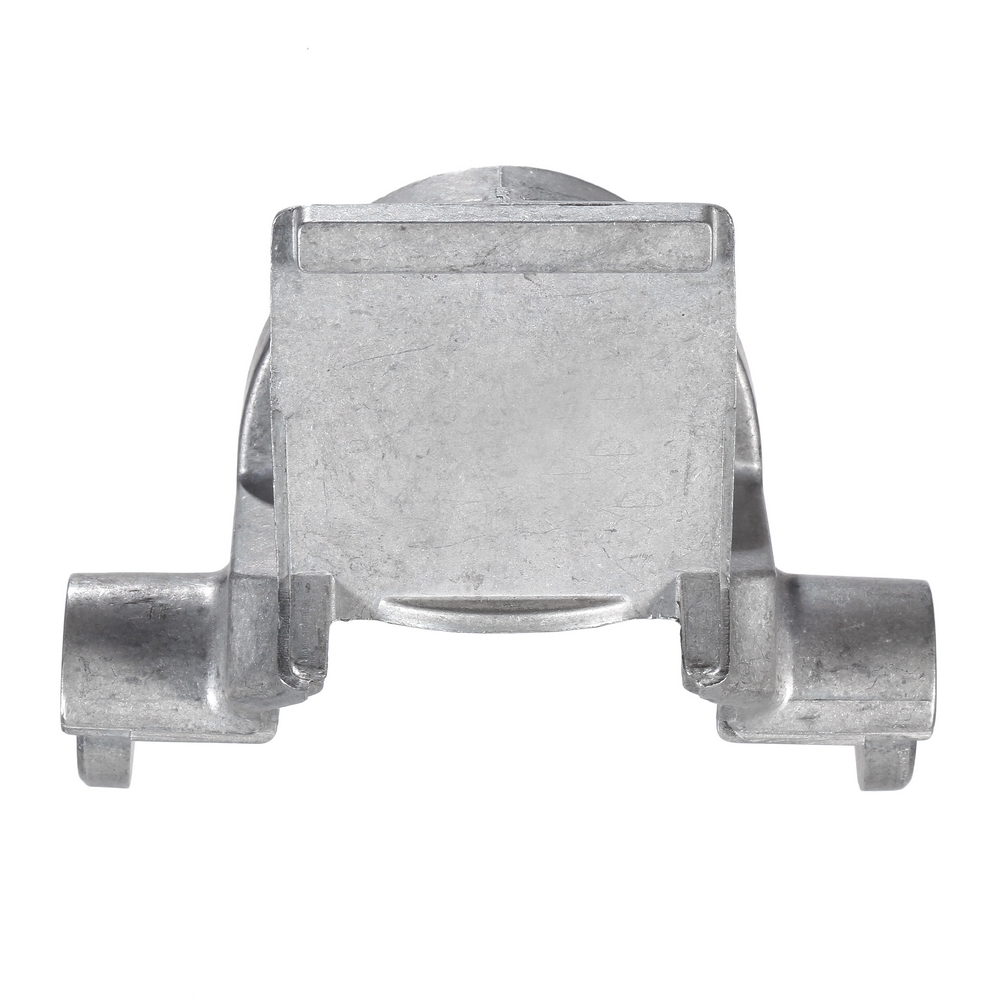
The capital expenditure required for hardened steel dies or complex pattern making represents the largest barrier to entry. High-pressure dies require premium H13 tool steel. Machining these dies involves slow, precise CNC milling and electrical discharge machining (EDM). The dies must then undergo specialized heat treatments to withstand the thermal shock of molten aluminum injecting at high velocities.
This high initial investment dictates a strict break-even point. Casting is rarely cost-effective for prototyping or low-volume production runs. Amortizing a massive tooling expense over a run of 500 parts results in an unviable per-unit cost. Machining from billet remains the logical choice until production volumes reach the thousands. You must have a guaranteed, multi-year production contract to justify cutting a steel die.
Porosity remains the most common defect in cast components. Gas porosity occurs when air or hydrogen becomes entrapped in the molten metal during the injection phase. As the metal solidifies, the gas forms spherical voids. Shrinkage porosity happens during uneven cooling. Thicker sections of the casting cool slower than thin walls, pulling liquid metal away and leaving jagged, irregular voids inside the part.
These internal voids limit the load-bearing capacity of the part. They act as stress concentrators where cracks initiate under fatigue loading. Porosity also complicates secondary processes. Attempting to weld a porous casting causes the entrapped gas to expand and blow out the weld pool. Subjecting standard high-pressure die castings to high-temperature heat treatments often causes the trapped gas to expand, resulting in severe surface blistering and dimensional warping.
Surface finish capabilities vary wildly between casting methods. Sand casting produces a rough, granular texture mirroring the sand used in the mold. High-pressure methods produce a much smoother finish, but flow marks, cold shuts, and minor surface imperfections remain common. Achieving a mirror finish directly from the mold is impossible without secondary polishing.
While modern molds achieve tight dimensional tolerances, they cannot match the precision of a CNC mill. Shrinkage rates vary slightly depending on the exact alloy batch, ambient humidity, and cooling conditions. Critical mating surfaces, bearing journals, and threaded holes almost always require secondary CNC machining to meet exact engineering specifications. You cannot cast a bearing press-fit tolerance; you must machine it.
Selecting the right casting method depends entirely on your volume, tolerance requirements, and budget. We break down the three primary methods used on the shop floor.
Casting Method | Ideal Production Volume | Tooling Cost | Surface Finish | Best Use Case |
|---|---|---|---|---|
High-Pressure Die Casting (HPDC) | 10,000+ units/year | Very High | Good to Excellent | Thin-walled enclosures, automotive housings. |
Sand Casting | 100 - 2,000 units/year | Low | Rough | Large engine blocks, heavy pump housings. |
Investment Casting | 500 - 5,000 units/year | Medium to High | Excellent | Complex aerospace parts, medical devices. |
This method injects molten metal into a steel die under massive hydraulic pressure. It forces the metal into thin sections before it can solidify. HPDC is best for high-volume, thin-walled parts requiring tight tolerances and rapid production capacity. Cycle times are extremely fast, often measured in seconds. A single machine can pump out thousands of parts per shift.
The trade-offs are significant. HPDC carries the highest tooling cost of any method. The turbulent injection process creates the highest risk of entrapped gas porosity. Because of this internal gas, standard HPDC parts are generally incompatible with high-temperature heat treatments or structural welding. You use HPDC for covers and enclosures, not for high-stress suspension arms.
Sand casting uses a mixture of sand and binders packed around a reusable pattern to create the mold cavity. The mold is destroyed after a single use. This method is best for low-to-medium volumes, massive parts, or components requiring complex internal cores. Engine blocks and large pump housings rely heavily on this process because you can cast massive chunks of metal without building a million-dollar steel die.
It offers much lower tooling costs compared to steel dies. However, production rates are drastically slower. The resulting surface finish is rough, and dimensional tolerances are wider. Parts produced this way require significantly more secondary machining to achieve functional mating surfaces. You will spend more time on the CNC mill cleaning up a sand-cast part.
This process begins by injecting wax into an aluminum die to create a pattern. The wax pattern is dipped into a ceramic slurry to build a hard shell. The wax is melted out, and molten aluminum is poured into the hollow ceramic shell. It is best for extreme precision, complex geometries, and specialized alloys.
Investment casting delivers an excellent surface finish and exceptional dimensional accuracy. It is ideal for complex components where secondary machining is physically impossible due to internal geometries. The primary trade-off is a higher per-unit cost due to the labor-intensive, multi-step ceramic shell building process. We use this for turbine blades and intricate fluid manifolds.
Aluminum offers excellent thermal and electrical conductivity, making it a staple in power distribution and telecommunications. Infrastructure hardware must withstand decades of outdoor exposure while dissipating heat generated by electrical currents. The material's natural passivation layer prevents degradation from rain, snow, and UV exposure.
Engineers frequently specify aluminum socket connector casting for grid infrastructure. These connectors demand strict dimensional stability to maintain secure electrical contacts under fluctuating thermal loads. The casting process allows for the integration of heavy heat-dissipating fins directly into the connector body, ensuring optimal thermal management without secondary assembly. You cast the fins right into the housing, maximizing the surface area for cooling.
Fall protection and heavy rigging sectors demand high-strength, lightweight, and fail-safe components. Equipment worn by workers must be light enough to prevent fatigue but strong enough to arrest a sudden fall. Aluminum provides the necessary strength-to-weight ratio for carabiners, pulleys, and rope grabs used on construction sites.
The engineering behind aluminum safety rope housing casting emphasizes absolute structural integrity. These life-critical applications necessitate rigorous non-destructive testing (NDT). Foundries must utilize advanced vacuum-assisted casting techniques to ensure zero internal porosity, followed by 100% X-ray inspection before the housings are approved for assembly. A single void in a safety housing can lead to catastrophic failure on the job site.
The medical sector relies on aluminum for its non-toxic properties and excellent sealing performance. Hospital equipment must withstand daily wipe-downs with harsh chemical disinfectants without degrading or corroding. The metal's smooth, non-porous surface, once machined or coated, prevents bacterial ingress and withstands rigorous sterilization protocols.
Cast aluminum features heavily in surgical lighting housings, imaging machine chassis, and mobile cart bases. The lightweight nature of the metal ensures that nurses and technicians can easily maneuver heavy diagnostic equipment through hospital corridors. Its rigidity ensures optical and imaging components remain perfectly aligned during transport. You cannot have a chassis flex when it houses sensitive laser optics.
Automotive manufacturers utilize cast aluminum for engine blocks, transmission housings, and structural suspension brackets. Lightweighting directly correlates to improved fuel economy, extended EV battery range, and compliance with strict emissions regulations. The ability to cast complex cooling jackets directly into an engine block is irreplaceable. You cannot machine those internal water jackets from a solid block.
Aerospace applications demand even stricter controls. While aerospace relies heavily on machined billet for critical flight surfaces, cast aluminum serves vital roles in cabin infrastructure, seating frames, and non-structural electronic housings. Every gram saved in an aircraft translates directly to increased payload capacity and reduced fuel consumption. Foundries supplying aerospace parts operate under intense AS9100 quality standards.
Determining when to transition from CNC machining billet aluminum to investing in casting molds requires strict volume analysis. Machining billet carries zero tooling costs but a high per-unit price due to machine time and material waste. Casting flips this equation, demanding high upfront capital but delivering a fractional per-unit cost.
The break-even volume threshold typically falls between 2,000 and 5,000 units annually, depending on geometric complexity. A simple block might require 10,000 units to justify a die. A highly complex housing with internal cavities might justify sand casting tooling at just 500 units. Engineers must map the projected lifecycle volume against the tooling amortization schedule. If the product lifecycle is only one year, stick to machining.
Material costs fluctuate based on global commodity pricing. Foundries adjust piece prices using alloy surcharges tied to the London Metal Exchange (LME). Buyers must understand the difference between secondary (recycled) and primary aluminum costs. Most die-casting alloys, like A380, utilize secondary aluminum, keeping material costs relatively low and stable.
High-performance alloys requiring primary aluminum, such as A356, carry a premium. The purity required for structural integrity prevents the use of standard recycled scrap. Procurement teams must factor these raw material premiums into their long-term production forecasts to avoid unexpected budget overruns. Always ask your foundry if their quote locks in the material price or floats with the market index.
Mitigating internal defects requires stringent inspection methods on the foundry floor. Foundries must implement X-ray inspection to detect internal gas and shrinkage porosity before parts ship. This non-destructive testing ensures only structurally sound components reach the assembly line. X-ray parameters must align with specific ASTM standards based on the part's critical function.
Surface defects require different protocols. Dye penetrant testing reveals microscopic surface cracks invisible to the naked eye. For dimensional accuracy, coordinate measuring machines (CMM) probe critical mating surfaces and machined features to verify compliance with strict geometric dimensioning and tolerancing (GD&T) callouts. We reject any batch that fails the CMM dimensional check.
Successful production relies heavily on Design for Manufacturability. Engineers must involve casting specialists early in the design phase. A part designed for CNC machining will fail in a casting die. DFM reviews identify necessary draft angles, which allow the part to eject from the mold without galling or sticking to the steel.
Maintaining uniform wall thicknesses prevents uneven cooling and subsequent shrinkage porosity. When thick and thin sections intersect, foundries must design strategic gating and overflow systems to feed liquid metal into the shrinking areas. Simulation software models this thermal behavior, allowing engineers to optimize the mold design before cutting steel. We run flow simulations on every new part to predict where air will trap.
Selecting the right foundry dictates project success. Procurement teams must audit potential suppliers against strict criteria. ISO 9001 or IATF 16949 certifications indicate a baseline of quality management. However, technical capabilities matter more than paperwork.
Evaluate the foundry's in-house tooling capabilities. Foundries that build and maintain their own dies respond faster to engineering changes and tool wear. Assess their secondary machining capacity. A supplier that casts, machines, and heat-treats under one roof eliminates logistical bottlenecks and assumes total responsibility for the final part dimensions. You want one vendor responsible for the finished print, not three separate shops pointing fingers at each other.
Aluminum casting stands as a highly efficient, scalable manufacturing process. It delivers exceptional material efficiency and rapid production cycles, provided the production volume justifies the tooling investment and the design is optimized for castability. The ability to consolidate assemblies and tailor mechanical properties makes it superior to machining for high-volume runs. Procurement and engineering teams must weigh their annual volume, required mechanical properties, and geometric complexity before committing to a specific method. High-pressure die casting suits massive volumes of thin-walled parts, while sand and investment casting serve lower volumes or extreme complexities.
Engage a qualified foundry for a comprehensive DFM review of your current CAD models to identify required draft angles and uniform wall thicknesses.
Request a detailed tooling amortization schedule based on your projected three-year production volume to confirm the break-even point.
Start with sand-cast prototypes to validate mechanical performance and fitment before investing capital in hardened steel high-pressure dies.
Define clear porosity acceptance criteria and specify required NDT inspection methods, such as X-ray or dye penetrant testing, directly on your engineering drawings.
A: The typical threshold ranges from 5,000 to 10,000 units annually. This volume is necessary to amortize the high initial cost of hardened steel tooling. For highly complex parts where CNC machining is exceptionally slow, the break-even point may drop to 2,000 units.
A: Billet aluminum is generally stronger due to its dense, continuous, and forged grain structure. Castings possess a more random grain structure and inherent micro-porosity. However, specific casting alloys like A356 can be optimized via T6 heat treatment to achieve strength levels suitable for heavy structural applications.
A: Standard high-pressure die castings are difficult to weld because entrapped gas porosity expands and compromises the weld pool. However, sand castings, investment castings, and vacuum-assisted die castings using low-gas alloys are highly weldable.
A: A380 is a silicon-copper alloy known for excellent fluidity, castability, and low cost, making it the standard for general die casting. A356 is a silicon-magnesium alloy that offers high strength, excellent elongation, and responds well to heat treatment, making it ideal for structural parts.
A: Foundries prevent porosity by utilizing vacuum-assisted casting to evacuate air from the mold before injection. They also rely on optimized gating design via thermal simulation software to ensure uniform cooling, combined with strict temperature control of the molten metal.
A: Yes. While casting achieves a near-net shape, critical features like tapped holes, tight-tolerance bearing journals, and perfectly flat mating surfaces require secondary CNC machining to meet exact engineering specifications.


