
Views: 0 Author: Site Editor Publish Time: 2026-08-19 Origin: Site


Procuring custom metal components often reveals a massive delta between initial quotes and final production costs. This makes accurate budget forecasting a primary challenge for engineering and procurement teams. Evaluating quotes requires untangling opaque pricing models. You must balance steep upfront tooling investments against per-part amortization. You also need to understand how process variations impact the overall financial lifecycle of the product. Many teams fall into the trap of looking only at the unit price. They ignore the hidden expenses of secondary machining, heat treatments, and inevitable scrap rates. We cover everything from raw material selection to tooling creation and secondary finishing for aluminum casting. You will gain a clear framework to evaluate the most cost-effective manufacturing method. We align these methods with your specific production volume and performance requirements. Understanding foundry floor realities allows you to design better parts. It empowers you to negotiate better contracts and avoid unexpected project overruns.
Volume Dictates the Process: The inverse relationship between tooling CapEx and unit price is the primary cost driver. Low-volume runs favor sand casting (low tooling, higher unit cost), while high-volume runs require high-pressure die casting (high tooling, lowest unit cost).
Material and Treatment Premiums: Specifying advanced alloys and heat treatments—such as an A356-T6 aluminum motor housing casting—significantly increases base material costs and processing time compared to standard A380 commercial alloys.
Process Selection Impacts Yield: Advanced methods like squeeze casting carry higher operational costs but are necessary to eliminate porosity in high-strength aluminum casting parts, ultimately reducing scrap rates and failure costs.
Lifecycle Expenses Extend Beyond the Foundry: True casting costs must account for secondary CNC machining, surface finishing, non-destructive testing (NDT), and mold maintenance over the product lifecycle.
Understanding how foundries build their quotes is the first step in controlling your manufacturing spend. A quote is rarely a simple calculation of material weight. It is a complex aggregation of energy, labor, machine time, and risk mitigation. Foundries must account for the physical realities of melting metal and injecting it into molds. Every second of cycle time and every ounce of wasted material impacts the final number on your invoice.
Foundries utilize a specific formula to calculate your quote. The baseline starts with raw material weight plus the energy required for melting and processing. Next, they add the machine hourly rate multiplied by the cycle time. Cycle time dictates everything on the production floor. A part that takes sixty seconds to solidify ties up the machine twice as long as a thirty-second part. Foundries also factor in a scrap allowance. No process yields perfect parts every shot. Rejected components must be absorbed into the cost of good parts. Finally, they add amortized tooling expenses and the foundry margin.
Tooling represents the most significant upfront hurdle in metal manufacturing. Entry-level tooling, such as sand casting patterns, presents a low barrier to entry. Patternmakers machine these from wood, polyurethane board, or aluminum. They work well for prototyping or limited runs. Their lifespan remains relatively short. Wood patterns warp from moisture, and plastic patterns wear down from the abrasive sand.
High-pressure die casting (HPDC) requires hardened steel dies. Machining complex cavities into H13 or premium hot-work tool steels requires extensive CNC milling and electrical discharge machining (EDM). The amortization model depends heavily on expected part life, cavity count, and production volume. A multi-cavity die requires a larger initial investment but drastically reduces the per-part machine time. You must weigh this initial investment against your long-term production strategy. Complex dies also require internal cooling lines. Conformal cooling channels follow the geometry of the part, pulling heat away rapidly. This adds to the upfront tooling expense but shaves seconds off the cycle time.
Not all aluminum behaves the same way in a molten state. Standard commercial alloys, such as A380 and A383, offer excellent baseline economy. They flow easily into complex molds and provide adequate strength for most consumer applications. Because they are widely used, foundries buy them in massive bulk. This keeps material expenses low. A380 contains higher iron levels, which prevents the molten metal from soldering to the steel die faces.
High-performance applications require high-purity primary alloys like A356 and A357. These alloys contain specific ratios of silicon and magnesium. They offer superior mechanical properties and excellent response to heat treatment. They carry a significant material premium. Volatile global aluminum commodity pricing shifts baseline expenses constantly. Foundries often include material surcharge clauses in long-term contracts to protect against market fluctuations. Specifying a primary alloy means the foundry cannot use recycled scrap, further elevating the baseline expense.
Melting aluminum requires massive energy inputs. Foundries operate reverberatory furnaces or coreless induction furnaces that run continuously. Natural gas and electricity rates directly impact the baseline melting expense. Holding furnaces keep the metal at precise casting temperatures, consuming additional power. Inefficient thermal management on the foundry floor translates directly to higher unit prices. Foundries that invest in heat recovery systems and high-efficiency burners can offer more competitive long-term pricing. You pay for every kilowatt-hour required to turn solid ingots into molten metal.
Volume dictates your manufacturing strategy. You must perform a rigorous break-even analysis before selecting a process. This involves calculating the exact volume threshold where the high tooling investment of die casting becomes more economical than the high per-part labor of sand casting. Plotting these two lines on a graph reveals the crossover point.
Many engineering teams fall into the low-volume trap. They design a highly complex part intended for die casting but only order a few hundred units. Domestic low-volume runs of small parts become prohibitively expensive. The setup time and tooling amortization overwhelm the material value. In these scenarios, alternative tooling strategies or different manufacturing processes become absolutely necessary to keep the project viable.
Part geometry directly dictates mold complexity. Complex molds require side actions, slides, and intricate coring. Every moving piece in a mold adds to the initial tooling invoice and increases the risk of maintenance downtime. Thin walls cool rapidly, requiring higher injection pressures and tighter process controls. Undercuts force the use of expendable sand cores or complex mechanical slides.
Heavy sections take longer to solidify. This extends the cycle time and ties up the casting machine. Poor design choices inflate the baseline quote before the first ounce of metal is even poured. Engaging in rigorous Design for Manufacturability (DFM) reviews early in the engineering phase strips unnecessary expenses from your component. Simple changes, like uniform wall thickness and generous draft angles, yield immediate financial benefits.
Selecting the right manufacturing method requires matching the process capabilities to your specific project constraints. No single method is universally superior. Each offers a distinct balance of upfront investment, unit expense, and metallurgical quality.
Sand casting offers the lowest tooling barrier to entry. The process involves packing specialized sand around a pattern to create a cavity. Once the metal is poured and solidified, the sand mold is destroyed. This makes tooling modifications relatively simple and inexpensive. If a design change occurs, patternmakers simply add body filler or machine away material from the master pattern.
Sand casting carries the highest per-part labor and secondary machining requirements. The surface finish remains rough, and dimensional tolerances are loose. Extensive CNC machining is usually required to achieve precise mating surfaces. This method fits prototyping, massive structural components, and low-volume production runs where expensive steel dies cannot be justified.
High-pressure die casting dominates mass production. Molten metal is injected into hardened steel dies under extreme pressure. This allows for incredibly fast cycle times and the ability to fill thin-walled, complex geometries. The surface finish looks excellent right out of the mold.
The trade-off is the extremely high upfront tooling investment. The dies must withstand immense thermal and mechanical shock. They require premium tool steels and advanced thermal management channels. HPDC provides the lowest per-part expense due to high automation. It fits mass production runs requiring tight tolerances and consistent quality across tens of thousands of units.
Standard die casting often traps microscopic gas bubbles, leading to internal porosity. When structural integrity is non-negotiable, advanced methods like squeeze casting are required. Squeeze casting applies massive hydraulic pressure to the metal as it solidifies. This feeds shrinkage and completely eliminates gas porosity.
These methods demand high tooling and specialized equipment investments. They are offset by near-net-shape accuracy and superior mechanical properties. This process fits producing A356-T6 squeeze casting parts. These components require zero porosity, absolute pressure tightness, and the ability to withstand extreme dynamic loads.
Investment casting provides exceptional dimensional accuracy and surface finish. A wax pattern is coated in ceramic slurry to build a shell. The wax is melted out, and metal is poured into the hollow ceramic. Tooling barriers are moderate, but the per-part labor is exceptionally high due to the multi-step, manual nature of the process.
When bridging from 3D printing, engineers often use specialized castable resins instead of wax. These resins carry a massive premium, adding significant prototyping expenses. Vacuum casting equipment further increases the overhead. Investment casting fits extremely complex geometries where extensive CNC machining would be physically impossible or financially prohibitive.
Casting Method | Tooling Investment | Per-Part Expense | Ideal Production Volume | Surface Finish Quality |
|---|---|---|---|---|
Sand Casting | Low | High | Low to Medium | Rough |
High-Pressure Die Casting | Extremely High | Lowest | Mass Production | Excellent |
Squeeze Casting | High | Moderate | Medium to High | Very Good |
Investment Casting | Moderate | High | Low to Medium | Exceptional |
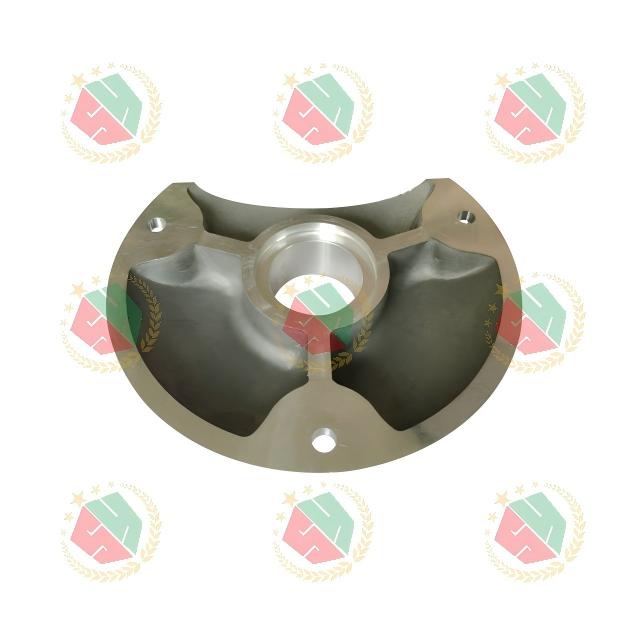
The invoice from the foundry rarely represents the final financial burden of a component. A myriad of secondary operations, testing requirements, and yield factors contribute to the true lifecycle expense. Ignoring these hidden elements during the quoting phase leads to severely compromised project budgets.
Raw casting processes cannot always hold the exacting tolerances required for modern engineering assemblies. You must factor in the necessity of secondary CNC machining. Establishing datum points, designing custom fixturing, and programming CNC toolpaths all add significant labor and machine time. Every drilled hole, tapped thread, and milled face increases the final component value.
Surface finishing also adds to the bottom line. Raw aluminum oxidizes and may not meet aesthetic or environmental requirements. You must include the expenses associated with anodizing, powder coating, or wet painting. Shot blasting is often required to remove flashing and uniform the surface. Impregnation processes seal microscopic porosity in fluid-handling components.
Thermal processing consumes massive amounts of energy and adds days to the lead time. The T6 heat treatment cycle is particularly demanding. It involves solution heat treating the metal at high temperatures to dissolve alloying elements, followed by a rapid quench. Finally, artificial aging precipitates these elements to lock in peak mechanical properties.
This cycle is mandatory for achieving the performance required in structural applications. You cannot skip this step if your design relies on maximum yield strength and fatigue resistance. The energy consumed by industrial furnaces directly inflates the unit price of the finished component.
High-liability industries demand rigorous proof of quality. Certifications and compliance testing add substantial overhead to the manufacturing process. Non-destructive testing (NDT) is often mandatory. X-ray inspection looks inside the metal to detect internal gas porosity or shrinkage cavities.
Dye penetrant testing reveals microscopic surface cracks invisible to the naked eye. Dimensional reporting using Coordinate Measuring Machines (CMM) ensures the part matches the CAD model perfectly. Maintaining the equipment, calibrating the sensors, and employing certified inspectors all contribute to the final negotiated unit price.
Beyond non-destructive methods, high-stress components often require destructive testing. Foundries cast separate test bars alongside your production parts to verify tensile strength, yield strength, and elongation. Sectioning involves physically cutting a sample part in half to inspect internal grain structure and verify that cooling rates were uniform. Spectrometer analysis confirms the exact chemical composition of the poured alloy matches the specification. These laboratory services require specialized equipment and trained metallurgists, adding another layer of expense to high-reliability components.
Foundry yield represents the ratio of shipped, acceptable parts to the total amount of metal poured. A low yield means the foundry is melting, pouring, and processing metal that ultimately ends up in the recycling bin. High rejection rates directly inflate your costs.
Foundries generate scrap through misruns, cold shuts, severe gas porosity, and dimensional warping. The gating and runner systems also consume raw material. While foundries remelt this scrap, the energy used to heat it is lost forever. Efficient mold design maximizes yield and minimizes the financial impact of scrap.
Proactive engineering and strategic sourcing are your best defenses against spiraling manufacturing expenses. You must identify potential risks early in the development cycle and implement strategies to mitigate them. A collaborative relationship with your manufacturing partner is required for long-term success.
Premature die failure destroys project economics. Aluminum is highly aggressive toward steel at molten temperatures. It causes soldering, where the aluminum chemically bonds to the die surface. Thermal cycling also causes heat checking, a network of fine cracks on the die face that transfers to the cast part.
Address this risk by specifying the correct tool steel. H13 is standard, but premium grades offer better thermal fatigue resistance. Implement advanced surface coatings like Titanium Carbonitride (TiCN) to resist soldering and wear. Proper die maintenance, including regular stress relieving and careful pre-heating, extends the tool life and protects your initial investment.
Actionable DFM strategies yield immediate financial benefits. Start by optimizing draft angles. Generous draft allows the part to eject smoothly, reducing cycle time and preventing damage to the mold. Maintain uniform wall thickness wherever possible. Drastic transitions from thick to thin sections cause uneven cooling, leading to shrinkage porosity and warping.
Eliminate unnecessary tight tolerances. Do not specify a machined tolerance on a surface that does not mate with another component. Every unnecessary tolerance forces the foundry to slow down the process or add a secondary machining operation. Simplify the geometry to eliminate the need for complex side actions or expendable sand cores.
Modern foundries rely on advanced casting simulation software to design gating and runner systems. Software models how molten metal fills the cavity and solidifies. This virtual testing prevents costly physical trial and error. It identifies potential cold shuts, air entrapment, and shrinkage zones before the steel die is ever cut. While engineering time for simulation adds to the upfront development expense, it drastically reduces the time to market and ensures a higher yield on the first production run.
Sourcing strategy plays a massive role in the final component value. You must evaluate offshore versus domestic production carefully. Offshore markets often provide significantly lower upfront tooling investments and reduced per-part labor. You must balance this against higher freight fees, longer lead times, and potential tariff risks.
Communication barriers and intellectual property protection are also valid concerns when manufacturing overseas. In some scenarios, investing in offshore die-cast molds for moderate volumes actually undercuts the extreme per-part labor of domestic sand casting. You must run a comprehensive landed-cost analysis that includes shipping, customs, and inventory carrying expenses to make an informed decision.
Securing the best value for your cast components requires moving beyond simple unit price comparisons and actively managing the entire manufacturing lifecycle.
Execute a comprehensive Design for Manufacturability (DFM) review with your foundry partner before finalizing any CAD models to eliminate unnecessary geometric complexity.
Calculate your exact volume break-even point to justify the transition from low-volume sand casting to high-volume die casting tooling.
Audit your engineering drawings to remove overly tight tolerances that force expensive secondary CNC machining operations.
Request fully itemized quotes that clearly separate tooling capital expenditures, raw material baselines, and secondary finishing expenses.
A: The most economical method depends entirely on your production volume. Sand casting offers the lowest entry barrier for low volumes due to minimal tooling requirements. Conversely, high-pressure die casting provides the lowest per-part expense for high volumes due to rapid cycle times and heavy automation.
A: Mold valuation depends on part complexity, cavity count, and expected lifespan. Simple, single-cavity molds represent a moderate capital expenditure. Complex, multi-cavity hardened steel dies require a significant upfront investment but amortize efficiently over mass production runs. Advanced conformal cooling channels also increase the initial valuation.
A: A356 requires high-purity primary aluminum, which carries a material premium over recycled commercial alloys. Additionally, the T6 designation requires a specialized two-step thermal process involving solution heat treating and artificial aging. This consumes substantial time and energy, raising the final component value.
A: Lifespan varies drastically by process and material. A typical sand pattern may yield several thousand parts before degrading from abrasive wear. In contrast, a well-maintained H13 tool steel die casting mold can reliably produce hundreds of thousands of shots before requiring major refurbishment or replacement.
A: Yes, 3D printed sand molds and investment patterns eliminate traditional tooling barriers for prototypes and ultra-low volume runs. However, casting-specific 3D resins and specialized binder jetting sands carry a premium. While the upfront tooling investment drops, the individual unit expense remains high.
A: Specifying tighter tolerances than the raw casting process can naturally hold necessitates secondary CNC machining. Every additional machining operation adds labor, machine time, and custom fixturing requirements. This significantly increases the final delivered component value and extends the overall production lead time.


